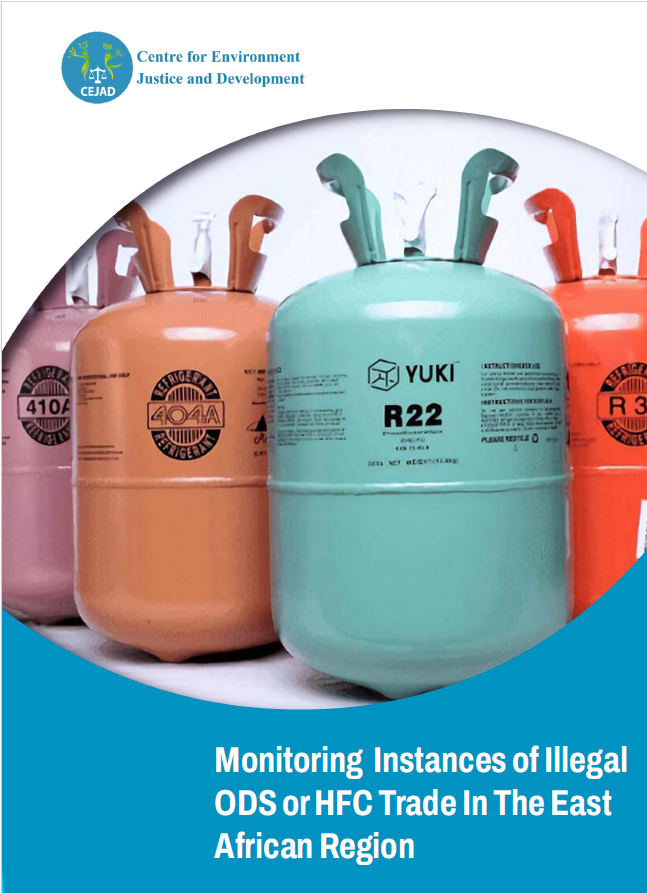

The world relies on the ozone layer to protect the Earth from harmful ultraviolet radiation. In the 1980s, global concern about ozone depletion led to the Montreal Protocol in 1987. This international agreement aims to phase out ozone-depleting substances
(ODS) like chlorofluorocarbons (CFCs) and hydrochlorofluorocarbons (HCFCs). Despite its success in reducing ozone depletion, illegal trade in ODS remains a challenge. The protocol’s different phase-out schedules for developed and developing countries
inadvertently created conditions for a black market in ODS. Initially involving CFCs, the trade continues today, where production and use of ODS still occur. The current global demand for illegal CFCs and –increasingly– HCFCs is not for manufacturing purposes,
but rather for refrigeration and air conditioning servicing. The protocol has implemented licensing and training to combat smuggling, yet challenges persist in controlling this illicit trade. There is thus a need to identify the challenges confronted by national authorities in controlling this illegal trade and promote the adoption of strong enforcement measures to combat it.
This report covers several areas, namely, existing policy and legislative frameworks and institutional arrangements; existing trading platforms, and how they support control of illegal trade; data management, including cases of data discrepancies; cases of illegal trade; enforcement actions, and more specifically, on prosecution; challenges and recommendations
from East African countries sampled for the study. The countries covered in this study are Kenya, Rwanda, Uganda, Tanzania, and South Sudan. The basis of their selection was the diversity in experience with the Montreal Protocol, ease of communication in English, being the common language, and established networks to allow for online engagements without travel due to the limited time available for this study.
Download the report here